
This past week marked two anniversaries that, when you put them side by side, feel like they belong together.
David Attenborough turned 100 years old last Friday, and a day later Gower celebrated 70 years since it became the UK's very first Area of Outstanding Natural Beauty - designated in May 1956, ahead of every other landscape in the country.
This week, we look at David and his crew’s most memorable visits to Swansea, and how the Gower as an AONB came to be.
I'll catch you on Sunday! Andrew
P.S. Know someone else who’d enjoy the Scoop? Please forward this email to them and ask them to subscribe here 🙂
The man who filmed the world - including Swansea
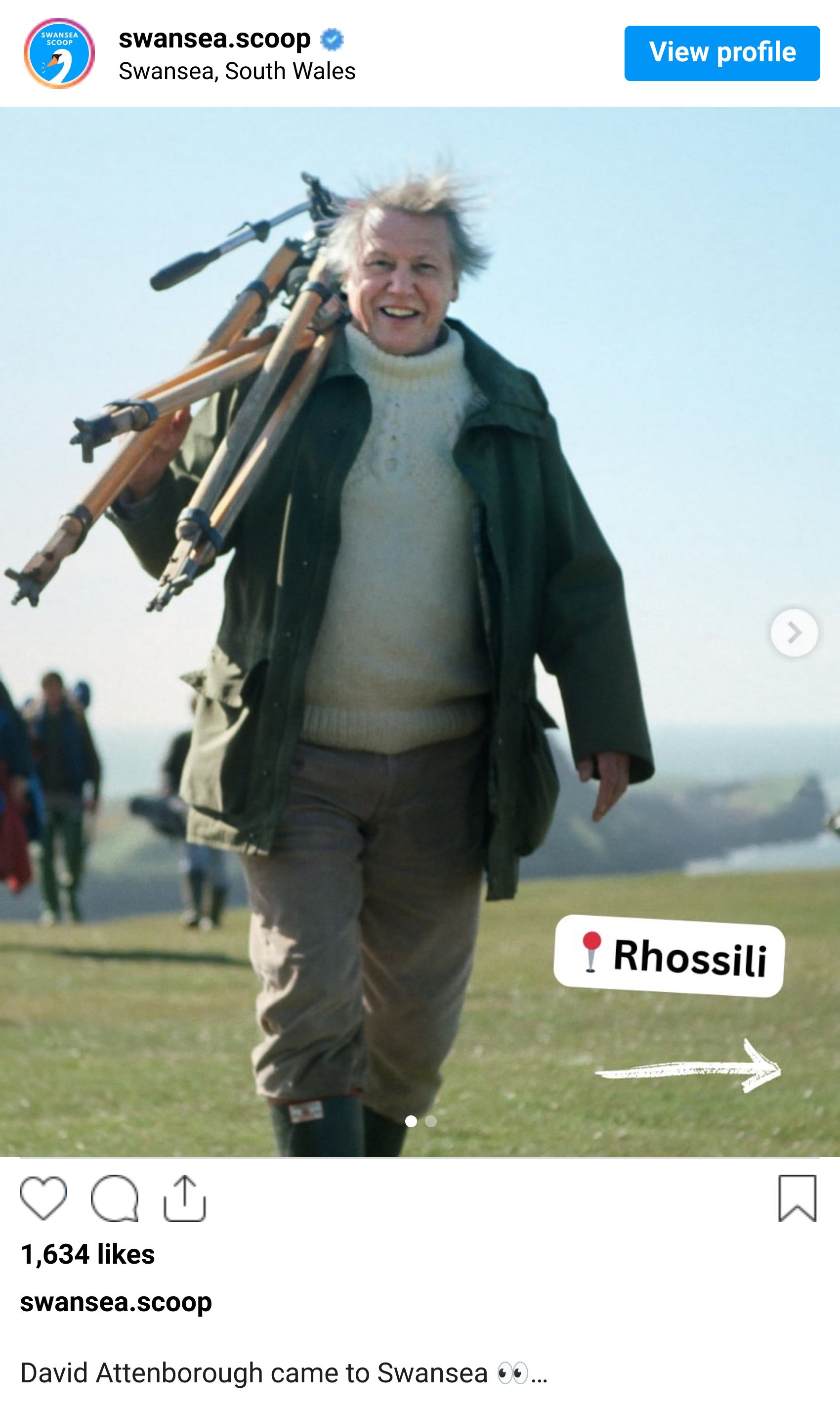
Over a career spanning seven decades, David Attenborough has filmed on every continent on earth. His production teams have travelled to Christmas Island, Patagonia, the rainforests of the Ivory Coast and the ice sheets of Antarctica, to name just a few. And on two separate occasions, they ended up in Swansea.
The first was in the late 1980s, while filming Trials of Life - the landmark 1990 BBC series on animal behaviour. Episode six, "Home Making", includes a sequence filmed at the secluded rock pools at Worm's Head, where Attenborough can be seen describing how a hermit crab finds a new home. The series is available to watch on BBC iPlayer, and the Swansea footage starts just after the two-minute mark.

The second visit to Swansea came two decades later. For the 2009 series Life, the BBC's Natural History Unit wanted close-up footage of clownfish hatching - the real-life Nemo. They'd tried filming in the wild, in the Pacific and Indian Oceans where clownfish actually live, but couldn't get close enough without disturbing the fish - so they travelled down the M4 instead.
A crew set up at Swansea University's Centre for Sustainable Aquaculture Research, where scientists had been successfully breeding clownfish for years. They spent weeks filming larvae hatching in specially prepared tanks, and the sequence made the final cut. The episode even explains how they got the shot.
70 Years as an AONB
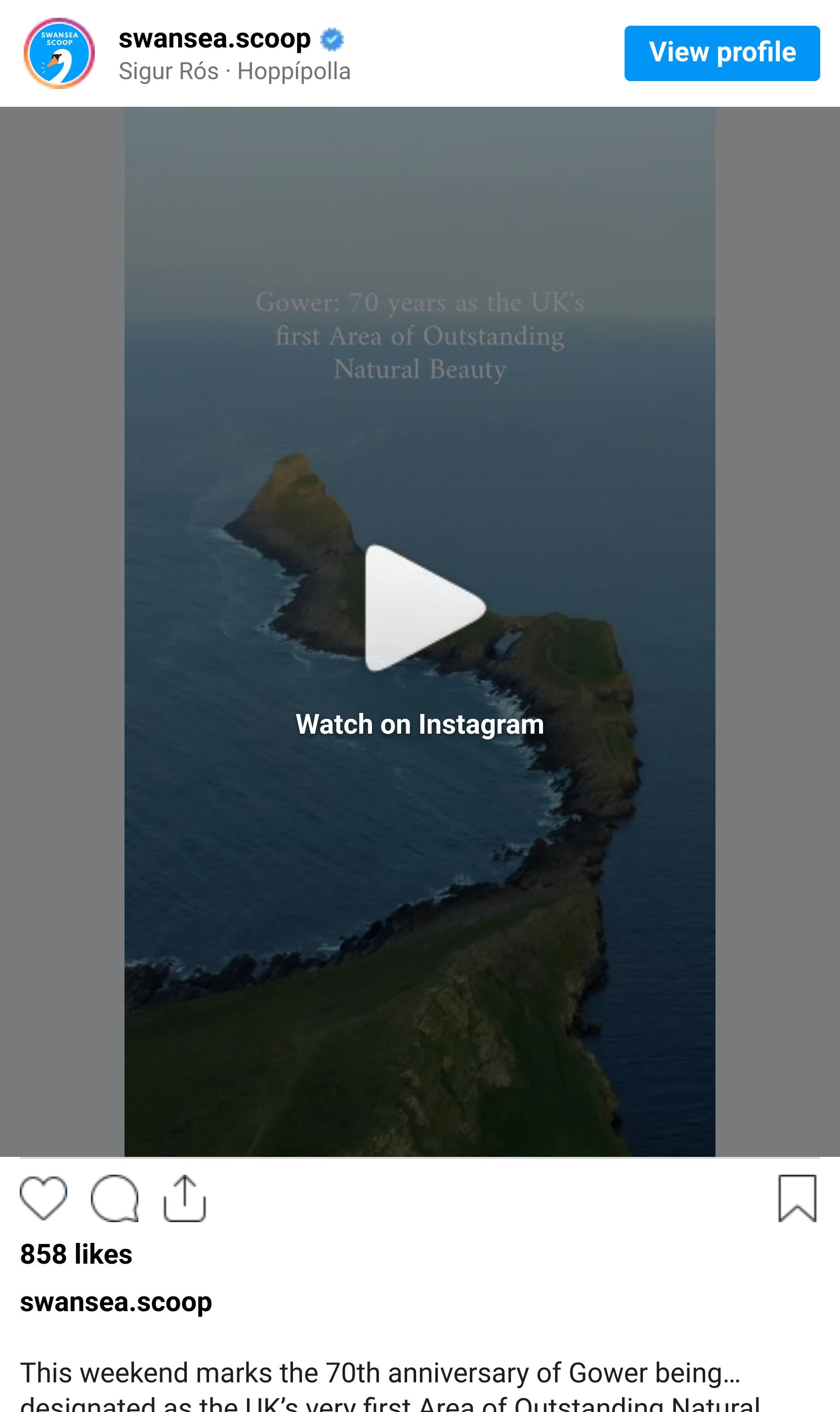
On May 9th, 1956, Gower became the first place in the United Kingdom to be designated an Area of Outstanding Natural Beauty. It pipped the Quantock Hills in Somerset, designated the same year, to claim the title.
It was the first of what are now 46 protected National Landscapes across England, Wales and Northern Ireland - a framework that has since been applied from the Cotswolds to the Causeway Coast. The legal idea had been created after the war, but Gower was where it was first put into practice.
What's often forgotten is why it happened when it did. Post-war Britain was developing fast, and Gower was under pressure. The Gower Society says effective local lobbying was crucial, with campaigners making the case to central government that this was a landscape of national importance - and they won.

The designation covers 188 square kilometres - limestone cliffs, sand dunes, salt marsh, open commons and wooded valleys. It includes 3 National Nature Reserves and 25 Sites of Special Scientific Interest. Gower contains one of Western Europe’s oldest known ceremonial burials, at Paviland Cave on the south coast, dating back around 33,000–34,000 years. And in 2025, it became the first area in South Wales to be designated an International Dark Sky Community.
Dylan Thomas, who knew it well, called it "one of the loveliest sea-coast stretches in the whole of Britain." He wasn't wrong - and seventy years ago this month, the law agreed with him.
I’ll catch you on Sunday.
Andrew.
Support the Scoop 💌

Enjoy the Swansea Scoop in your inbox each week?
Help keep us going with a monthly contribution (just £2) or a one-off tip via Buy Me a Coffee (no sign up required).
It’s quick and easy to do and every bit of support helps us stay independent, local, and free to read.
Big thanks to our 102 supporters so far, including the most recent all-round good egg, an anonymous new member! 🙏

✅ Was this email forwarded to you? Sign up
📧 Want to advertise your business to our audience of over 10,000 newsletter subscribers and 75,000+ on social media? Reply to this e-mail and we’ll be in touch!
Sources: